Most strategies are beautifully designed.
Clear slides.
Strong narratives.
Well-articulated goals.
And then… nothing happens.
The problem isn’t that strategy decks are wrong.
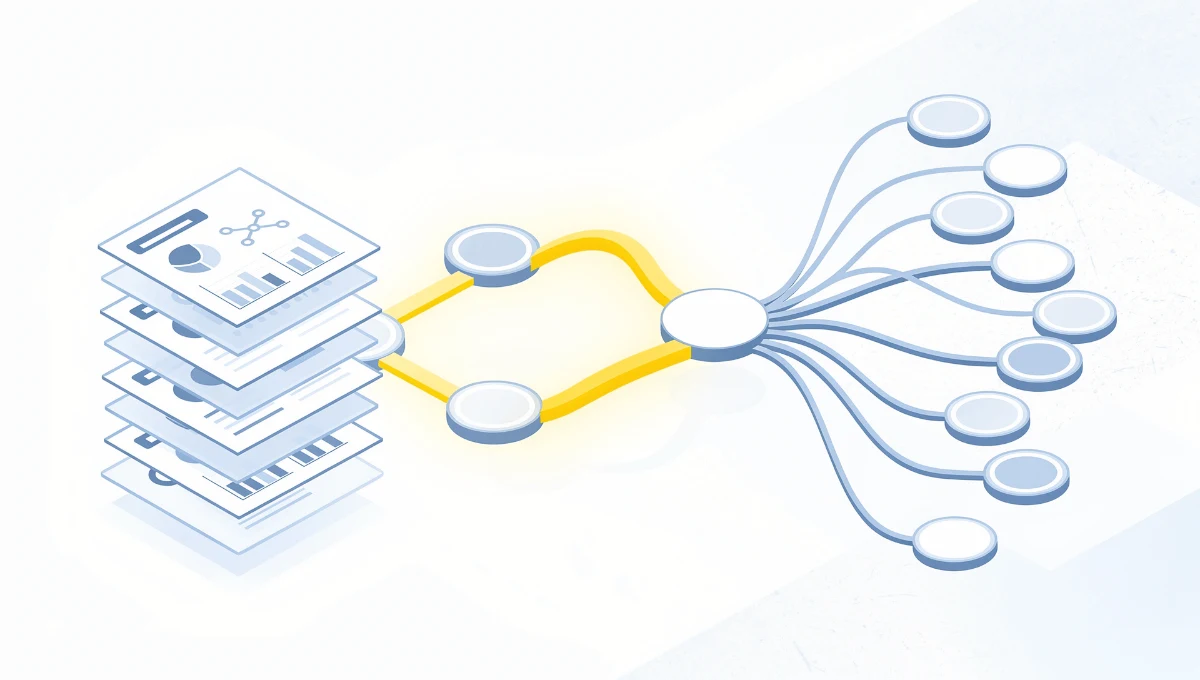
It’s that they are static—while decisions are dynamic.
Strategy doesn’t succeed when it’s presented well.
It succeeds when it shows up where decisions are made.
Strategy Decks Don’t Make Decisions
Strategy decks are designed for:
- Alignment moments
- Executive reviews
- Annual planning cycles
But real strategy lives elsewhere:
- In backlog prioritization
- In roadmap trade-offs
- In feature acceptance criteria
- In “should we do this now?” conversations
Harvard Business Review has long highlighted the gap between strategic planning and execution, noting that strategy often fails because it doesn’t translate into daily decision-making.
Slides explain intent.
They don’t enforce it.
The Hidden Cost of Slide-Based Strategy
When strategy lives primarily in decks:
- Teams interpret strategy differently
- Decisions rely on recency and influence
- Priorities reset with every meeting
- Alignment decays between planning cycles
According to McKinsey, organizations struggle with execution when strategic priorities aren’t continuously embedded into operational decisions.
The cost isn’t visible failure.
It’s slow drift—quarter after quarter.
Strategy Is a Decision System
Strategy isn’t a document.
It’s a decision-making system.
If strategy doesn’t answer:
- Which option is better right now?
- What trade-off are we willing to accept?
- What matters more when everything matters?
Then teams will answer these questions themselves.
Not because they want to override strategy,
but because strategy didn’t arrive with them.
From Decks to Decisions
To move beyond slides, organizations need strategy to be:
1. Continuously Available
Not buried in folders or remembered by a few people.
2. Decision-Linked
Every prioritization, scope change, or roadmap update connects back to intent.
3. Systematized
Strategy logic must persist beyond meetings, people, and quarters.
MIT Sloan Management Review emphasizes that organizations succeed when strategic intent is translated into operational decision frameworks rather than static plans.
This is how strategy becomes actionable, not inspirational.
What Changes When Strategy Drives Decisions
When strategy operates as a system:
- Decisions speed up
- Debates shorten
- Trade-offs become explicit
- Alignment compounds
Teams stop asking, “What did leadership want?”
and start acting on what strategy requires.
Why Strategy Keeps Slipping Back into Slides
- Treating decks as the final output
- Refreshing strategy annually instead of continuously
- Expecting people to “remember” context
- Measuring alignment only during reviews
Strategy doesn’t fail because teams forget.
It fails because memory isn’t infrastructure.
This Is Not About Killing Strategy Decks
Strategy decks still matter:
- They align
- They communicate
- They inspire
But they are inputs, not execution systems.
Strategy survives only when it is operationalized into decisions—not archived as slides.
Strategy Wins When Decisions Remember
The real test of strategy isn’t how clearly it’s explained.
It’s whether:
- Decisions remain consistent over time
- Trade-offs align without debate
- Teams act without reinterpretation
When strategy lives inside decisions,
slides become optional—but alignment becomes inevitable.
❓ Mini FAQ — From Strategy Decks to Strategic Decisions
Why do strategy decks fail in execution?
Because they don’t travel with daily decisions.
Isn’t documentation enough?
No. Documentation informs; systems enforce.
How do organizations operationalize strategy?
By embedding intent into decision frameworks and prioritization logic.
Does this reduce flexibility?
No. It reduces confusion while preserving adaptability.
How does Priowise help here?
By transforming strategy from static artifacts into a living decision system.