Most organizations believe they have a strategy.
They can point to:
- A deck
- A roadmap
- A set of objectives
Yet strategy still fades between planning cycles.
A living strategy isn’t something you have.
It’s something your organization does—continuously.
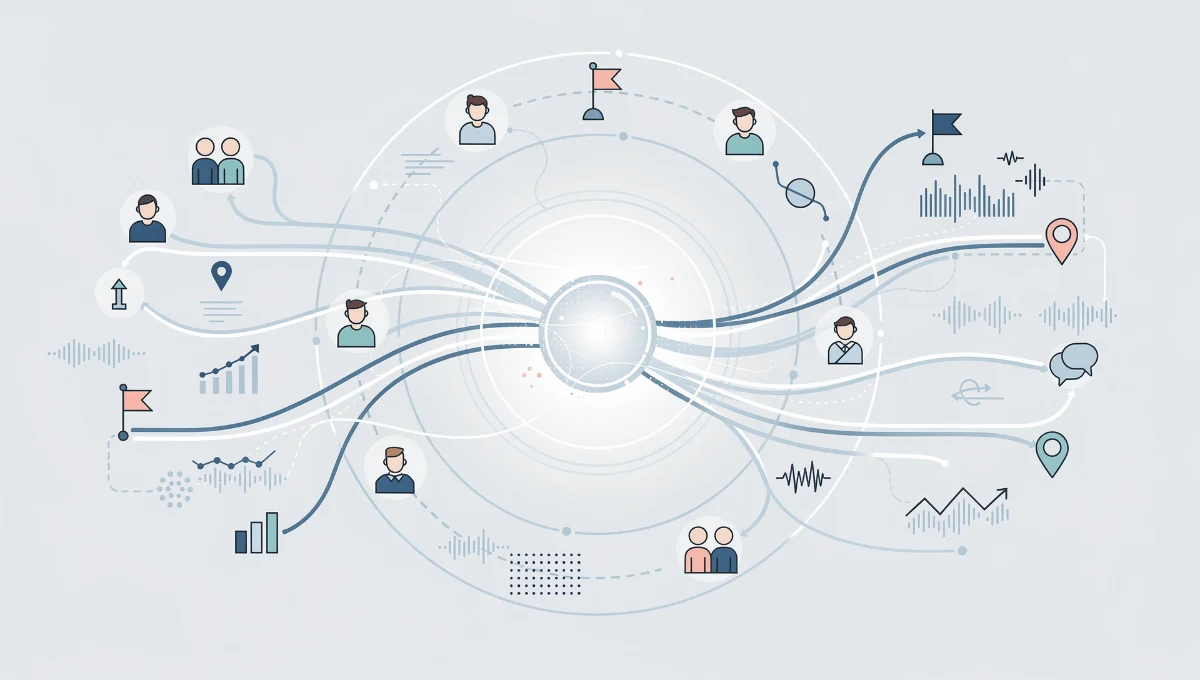
And it only works when strategy becomes a system.
Static Strategy Can’t Survive Dynamic Reality
Markets change.
Teams evolve.
Priorities shift.
But strategy is often treated as fixed:
- Annual planning
- Quarterly refresh
- Slide-based alignment
Boston Consulting Group highlights that strategy fails when it cannot adapt to continuous change in execution environments.
Static artifacts don’t keep up with living organizations.
The Cost of Not Having a Living System
Without a living strategy system:
- Decisions depend on interpretation
- Alignment resets with every meeting
- Trade-offs are debated repeatedly
- Strategy becomes fragile
McKinsey notes that organizations struggle with execution when strategic priorities are not reinforced continuously across decision layers.
The cost isn’t chaos.
It’s quiet inefficiency.
Strategy Is a Capability, Not a Document
A living strategy is not:
- A roadmap
- A planning ritual
- A shared understanding
It is a capability:
- To remember intent
- To adapt without drifting
- To guide decisions consistently
MIT Sloan Management Review emphasizes that organizations succeed when strategy becomes embedded into operating systems, not isolated planning moments.
The Anatomy of a Living Strategy System
A living strategy system has five core components:
1. Clear Strategic Intent
Objectives, assumptions, and priorities are explicit—not implicit.
2. Persistent Strategic Memory
Context doesn’t disappear after meetings or personnel changes.
3. Decision-Level Integration
Every prioritization and trade-off is linked back to strategy.
4. Continuous Feedback Loops
Execution informs strategy—not just the other way around.
5. Adaptive Recalibration
Strategy evolves with reality without losing coherence.
Together, these turn strategy from a plan into an operating system.
What Changes When Strategy Is Alive
Organizations with living strategy systems experience:
- Faster, aligned decisions
- Fewer priority conflicts
- Reduced rework
- Stronger autonomy without loss of control
Strategy stops being “explained”
and starts being enforced through decisions.
What a Living Strategy Is Not
- More documentation
- Heavier governance
- Slower approvals
- Less autonomy
A living system reduces friction.
It doesn’t add it.
This Is Where Tools End and Systems Begin
Tools help teams work.
Systems help organizations think.
A living strategy system isn’t about dashboards or templates.
It’s about making strategy unavoidable in daily decisions.
That’s the shift.
Strategy Should Breathe
If strategy only appears during planning, it’s already obsolete.
Living strategies:
They don’t sit in slides.
They move with decisions.
That’s what a living strategy system looks like.
❓ Mini FAQ — What a Living Strategy System Looks Like
What makes a strategy “living”?
Its ability to guide decisions continuously, not periodically.
Is this just agile planning?
No. Agile manages delivery. Living strategy manages intent.
Does this replace leadership judgment?
No. It amplifies it by preserving context.
How does feedback influence strategy?
Execution outcomes continuously refine priorities and assumptions.
How does Priowise support living strategy systems?
By preserving strategic memory and embedding intent into decision-making workflows.